Heating & air · Las Vegas valley
Built for 106°. Sized to the ton.
AC, heat pumps and ducts across the valley. Describe your house and see the BTU/h, the tons and the yearly power bill of each SEER2 level before anyone tries to sell you a box.
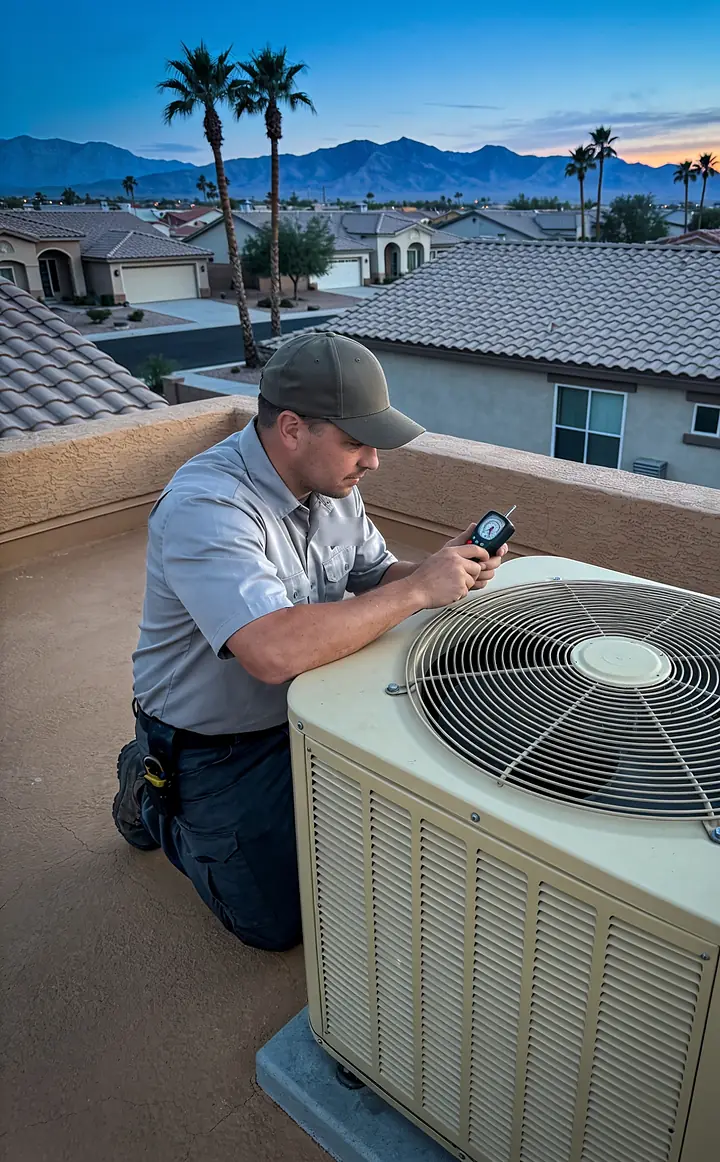
The sizing bench
How much cooling does your house really need?
Move the sliders and the answer redraws: the heat load in BTU per hour, the tons, the system size that fits, whether it also heats you on a 31 °F night, and what each SEER2 level costs to run at Nevada power prices.
A simplified rule of thumb, not an ACCA Manual J. Use it to sanity-check a quote; before buying, ask for the real room-by-room calculation.
Cooling load on the design day
—BTU/h—
Recommended: —
Where the heat comes from
- Sun through windows—
- Roof & attic—
- Heat through glass—
- Walls—
- Air leaks—
- Duct losses—
- Lights & appliances—
- People—
Winter check, heat pump
—
Yearly running cost by SEER2
Default: EIA, Nevada residential average, Jan–Jul 2026 (U.S. EIA).
Running costs use NOAA 1991–2020 cooling and heating degree days for Harry Reid Intl. (3,720 and 1,836 a year) and assume today’s price for every month. Estimates for comparison, not a bill or financial advice. Method and sources: how this is calculated.
How this is calculated
Heat load. We model the house as a square footprint (the number of stories and the ceiling height change the wall area and the load, so "sq ft per ton" varies with them) and add up, for the design day: roof and attic (U × area × (ΔT + attic sun gain)), walls (U × net wall area × (ΔT + sun on walls)), glass conduction (U × glass area × ΔT), sun through glass (glass area × SHGC × a solar factor of 45, 80 or 115 BTU/h·ft² for shaded, mixed or full sun), air leaks (1.08 × CFM × ΔT, with 0.25 to 0.7 air changes per hour), 230 BTU/h per person and 1,200 BTU/h + 0.4 per sq ft for lights and appliances. Ducts add 5 %, 15 % or 30 % depending on insulation. ΔT is the design temperature minus 75 °F indoors. Glass area is 10, 15 or 20 % of the floor area.
Size. Tons = BTU/h ÷ 12,000. Nominal tons are rated at 95 °F; we assume about 0.9 % less capacity per °F above that (typical, check the maker’s data), and pick the smallest standard size (1.5–5 tons) that covers at least 95 % of the load at the design temperature. Above 5 tons we split into two or more systems.
Winter. Heat loss = (U·A of walls, roof and glass + 1.08 × CFM) × (70 − 31 °F) × duct factor. A standard heat pump is assumed to keep about 58 % of its rated capacity at 17 °F, linear up to 100 % at 47 °F (typical; cold-climate models do better).
Running cost. Yearly cooling kWh = load ÷ (design temperature − 65 °F) × cooling degree days × 24 ÷ (SEER2 × 1,000), spread by month. Heating uses heating degree days and HSPF2 (7.5 is the federal minimum for heat pumps). Price: U.S. EIA, Electric Power Monthly, table 5.6.B, Nevada residential average January–July 2026: 13.53 ¢/kWh.
Sources. Design temperatures: ASHRAE Handbook 2009 climatic design data for Las Vegas McCarran (now Harry Reid Intl.), via the U.S. DOE EnergyPlus weather files. Normals and degree days: NOAA NCEI U.S. Climate Normals 1991–2020, station USW00023169. Efficiency minimums: U.S. Department of Energy, central air conditioner and heat pump standards in force since January 1, 2023. U-values, air changes and solar factors are typical textbook values chosen for this demo.
Services
Cold air in July, warm air in January.
Every job starts with a measurement, not a guess: temperature split, static pressure, refrigerant charge. Then you get the price, then we work.
-
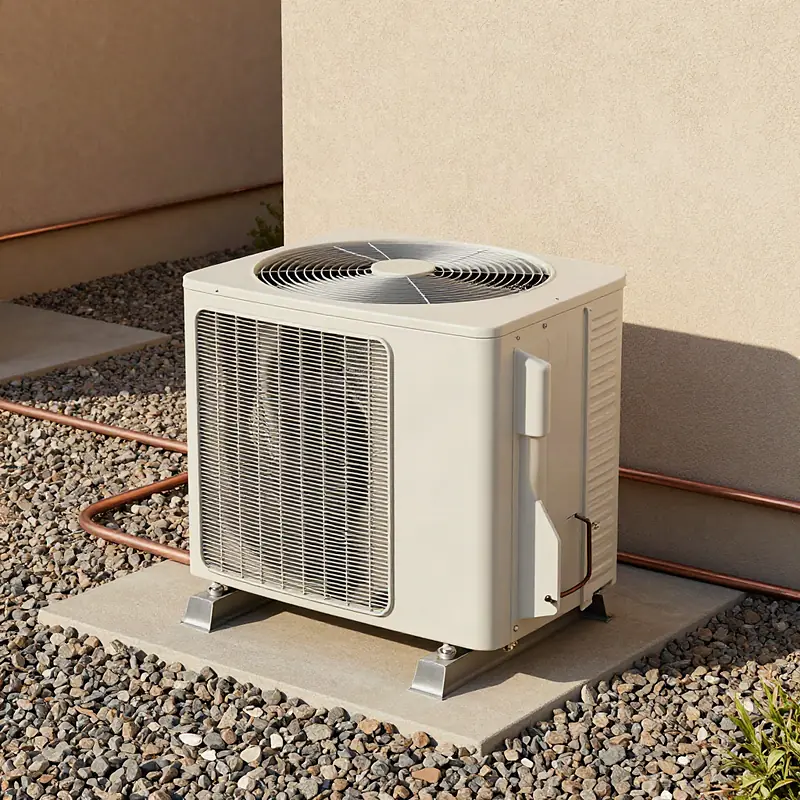
Most calls May–Sep
AC repair & tune-ups
No cool air, ice on the lines, a breaker that keeps tripping. We test refrigerant charge, capacitors and airflow, and tell you the price before we fix anything.
-
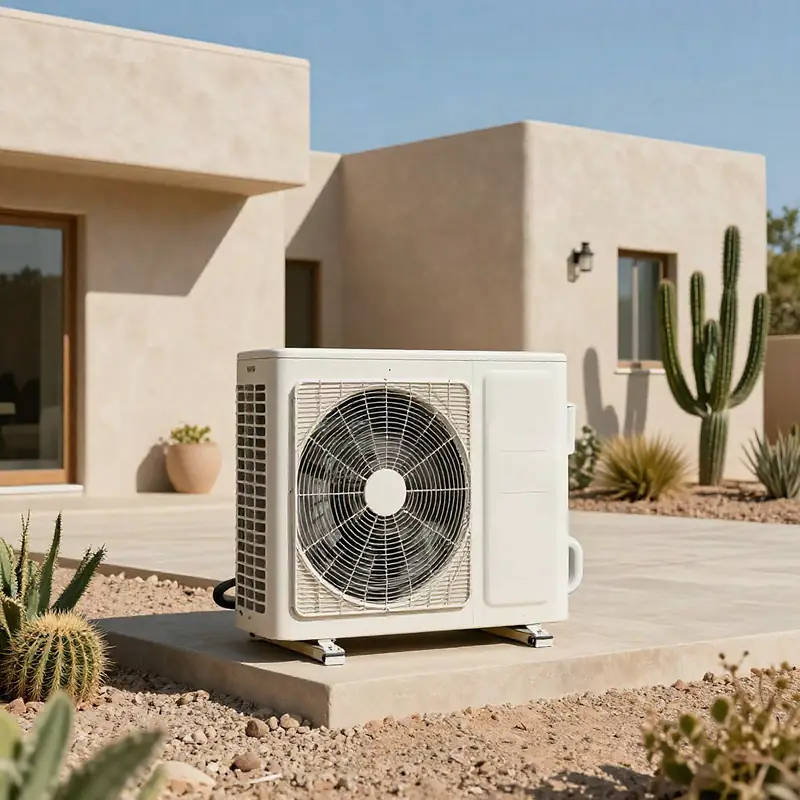
Cooling + heating
Heat pumps
One outdoor unit that cools all summer and heats on the 31 °F nights. We size it for both seasons and check the winter capacity, not just the label.
-
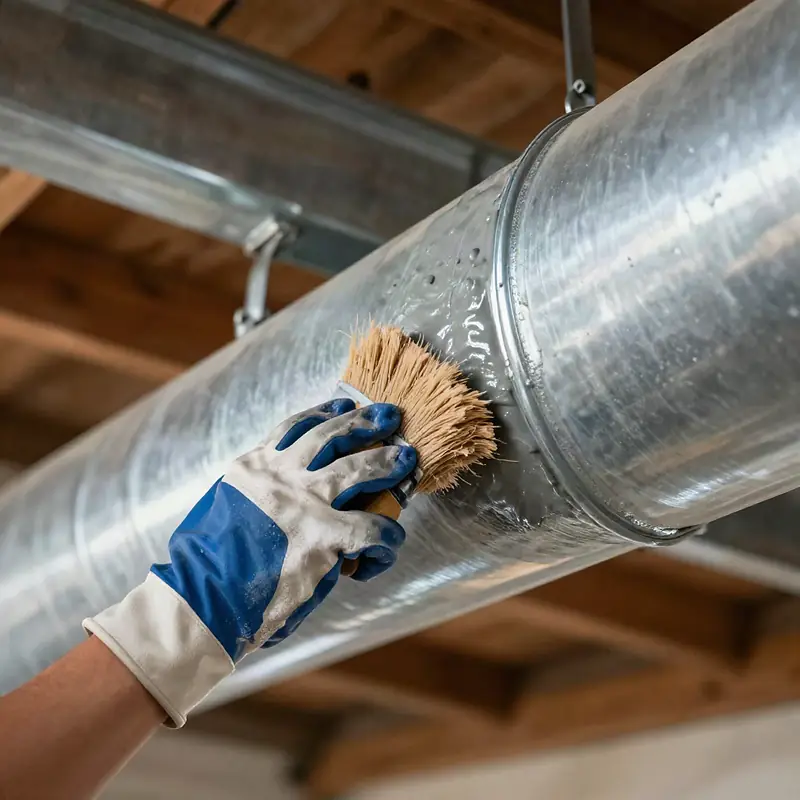
Often the cheapest ton
Duct sealing & attic ducts
Ducts in a 140 °F attic leak cold air where nobody feels it. We seal joints with mastic, fix crushed runs and re-balance the rooms.
-
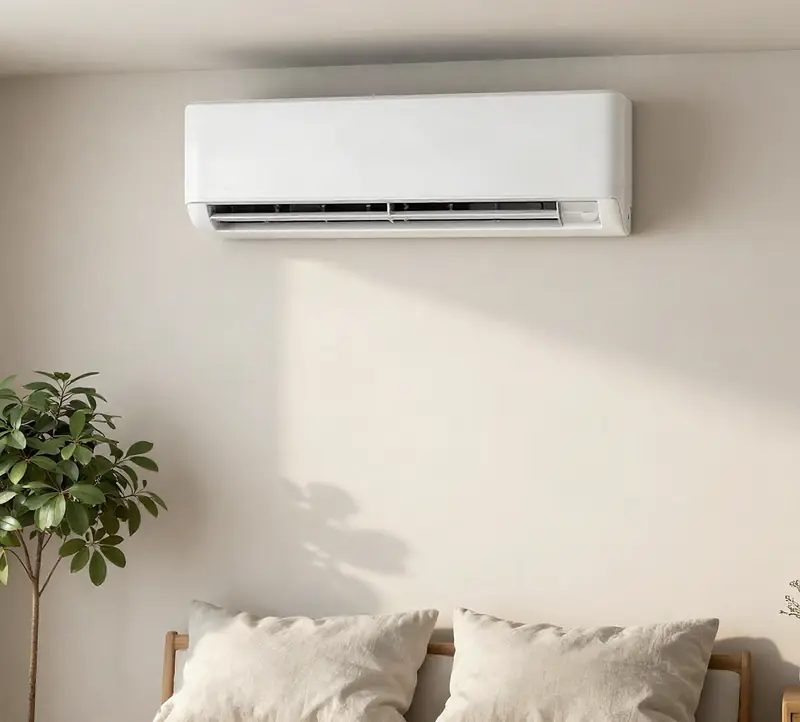
Rooms & casitas
Ductless mini-splits
For the garage gym, the casita or the west bedroom that never cools down. Quiet heads, their own thermostat, no ductwork.
-
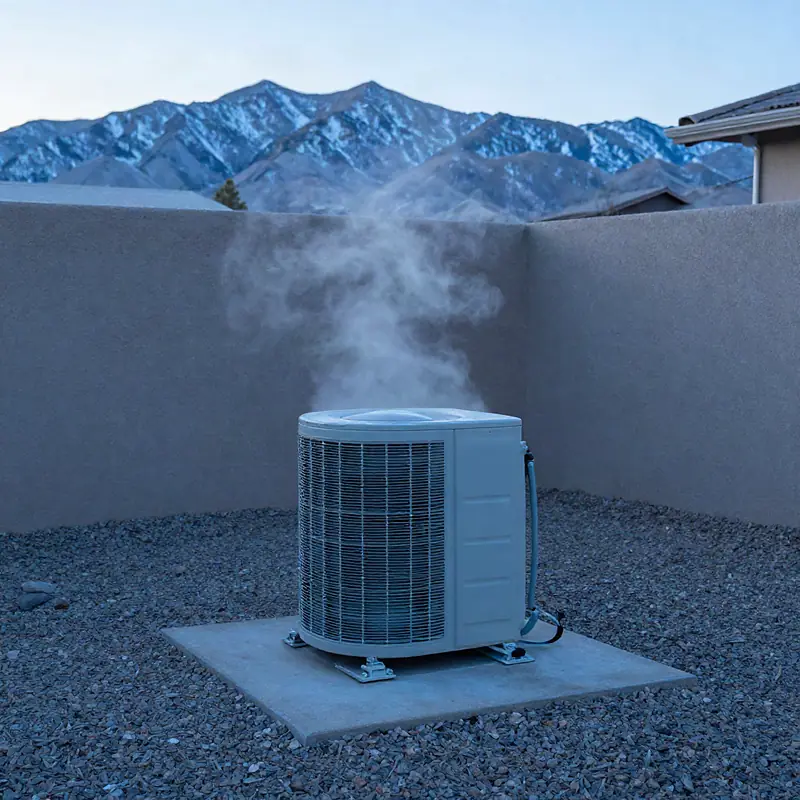
Nov–Feb
Heat pump heating
Heat pump heating service, heat strips, and defrost problems on cold January mornings. If you already have a gas furnace we check it too, with a carbon monoxide test on every gas appliance we touch.
-
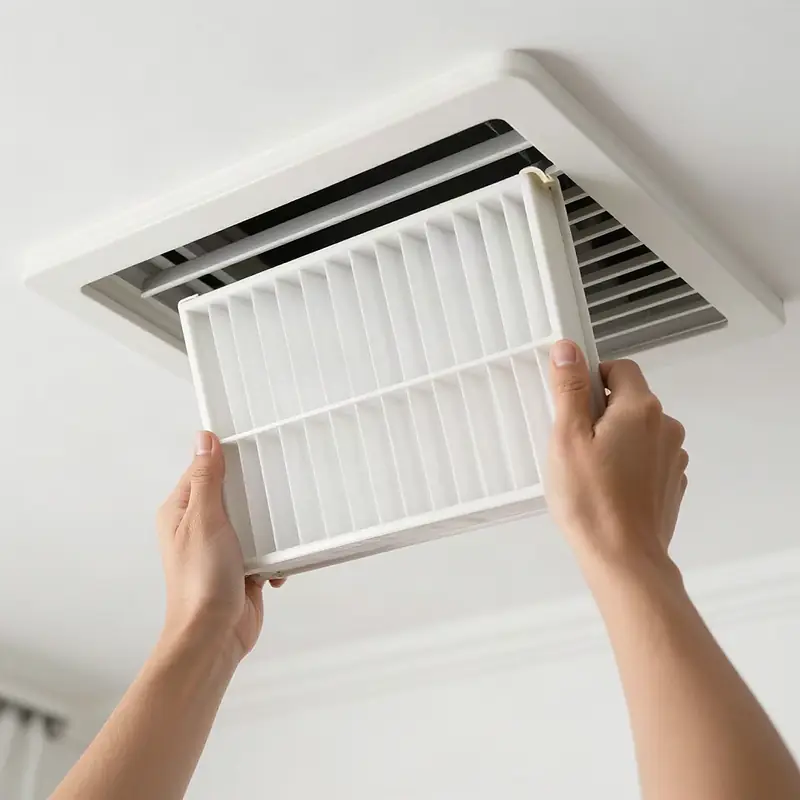
Dust season
Filters & indoor air
Desert dust clogs filters fast. Right-size filters, return grilles that actually breathe, and coil cleaning so the system moves the air it was rated for.
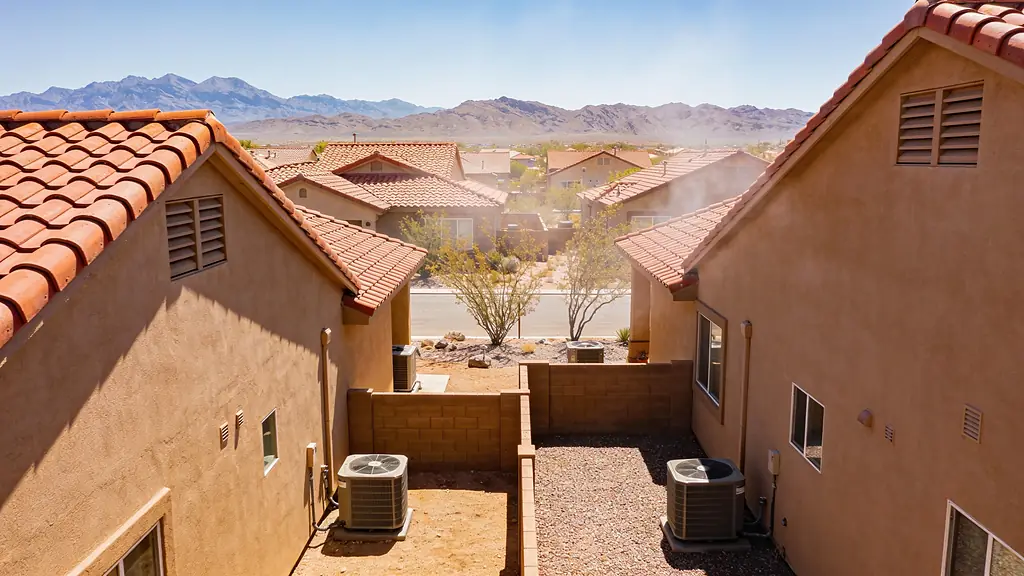
Why Vegas is different
A desert sizes your AC, not a rule of thumb.
Hot, dry and long: cooling here is almost all sensible heat, attics bake, and the outdoor unit works at temperatures most of the country never sees. These are the numbers we design with.
- 106°FDesign dayHotter only about 1 % of the year’s hours (ASHRAE). It’s the temperature a system should be sized for.
- 3,720Cooling degree daysMore than twice the 1,836 heating degree days: here, the AC is the big bill (NOAA 1991–2020).
- 104.5°FNormal July highWith nights that only fall to 82 °F, the system barely rests for three months.
- 31°FWinter designMild enough for a well-sized heat pump to heat most homes without a furnace.
How a replacement works
From the first visit to cold air.
- 01
Measure
Room by room: floor area, ceiling height, windows and which way they face, attic insulation and where the ducts run.
- 02
Calculate
A full Manual J load calculation at the Las Vegas design day, not a square-foot rule. You get the printout.
- 03
Choose
Two or three sizes and SEER2 levels side by side, with the yearly running cost of each at Nevada power prices.
- 04
Install
Line set flushed or replaced, deep vacuum, charge by weight and superheat, ducts sealed at every connection.
- 05
Prove it
We measure airflow and the temperature split at the vents, and leave the numbers with you.
Example projects
Fixes measured in degrees.
Three typical jobs in the valley. They are examples written for this demo website.
-
 Example project
Summerlin
Smaller unit, cooler house
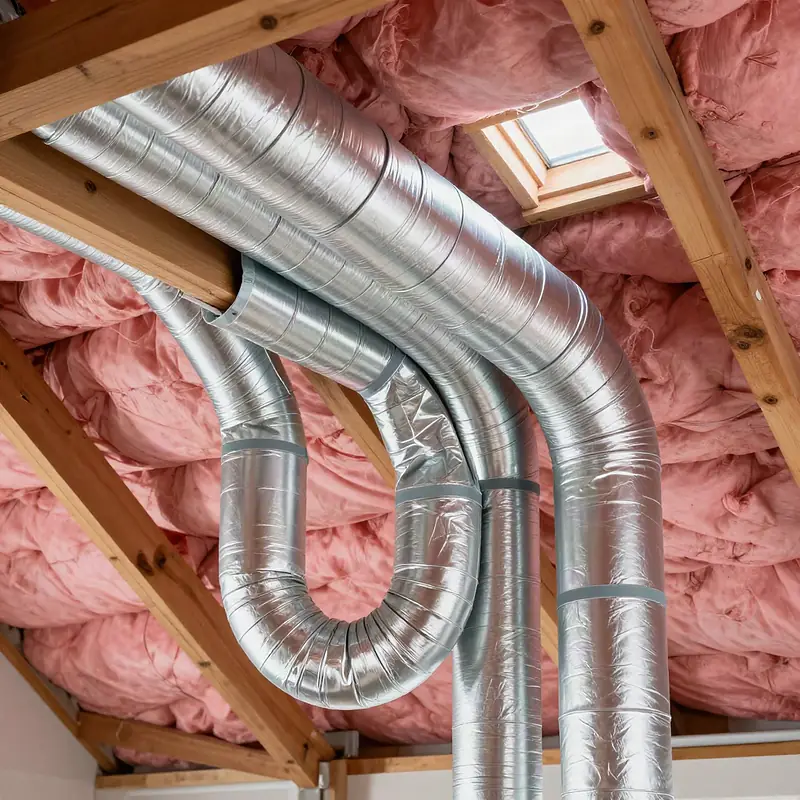
A 2,400 sq ft single-story with a 5-ton unit that never caught up in July. Sealing and re-hanging the attic ducts dropped the calculated load enough for a 4-ton heat pump.
- Before
- 5 tons
- After
- 4 tons
- Duct leakage
- −60 %
-
 Example project
Henderson
A west room that finally cools
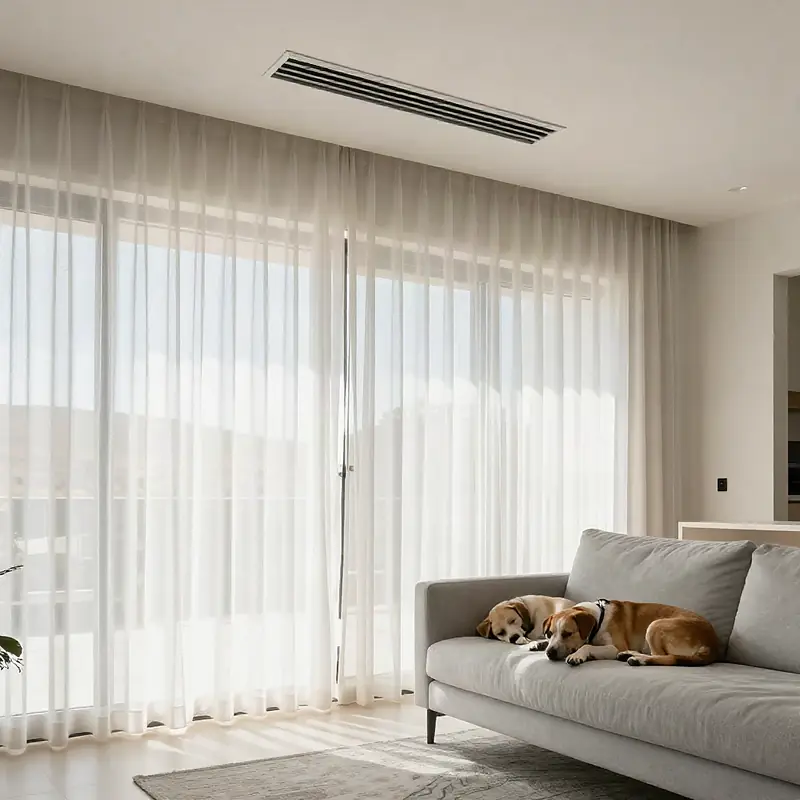
Two-story home where the upstairs west bedroom ran 9 °F warmer than the thermostat. A single-zone mini-split solved it without touching the main system.
- Room gap
- 9 °F → 1 °F
- Install
- 1 day
- Head
- 12k BTU/h
-
 Example project
Spring Valley
Same system, more cooling
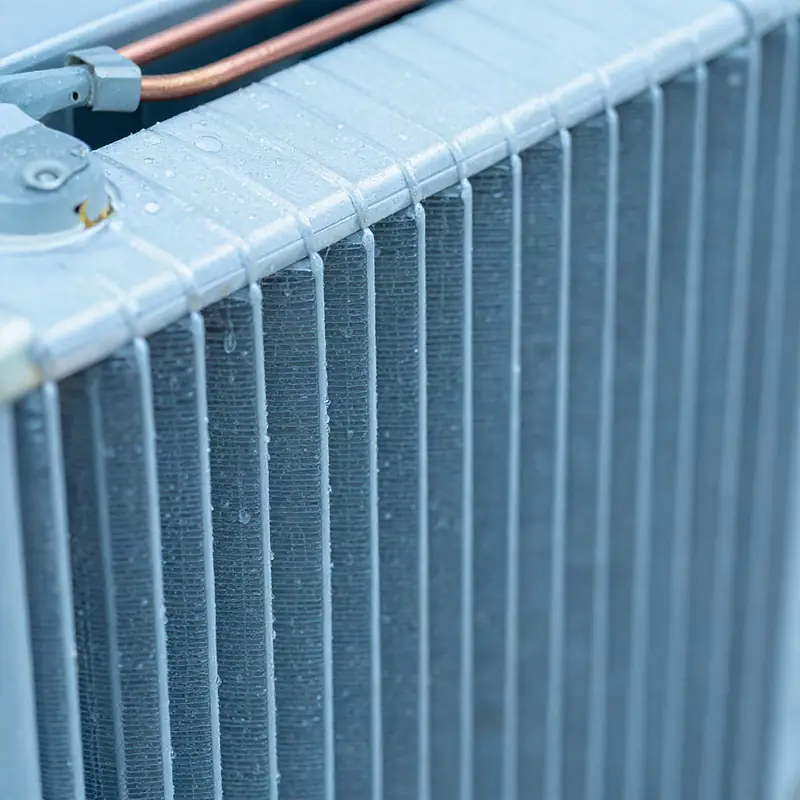
A 12-year-old 3-ton unit with a dusty coil and a low charge. Coil cleaning, a new capacitor and a proper charge brought the temperature split back from 11 °F to 19 °F.
- Split before
- 11 °F
- Split after
- 19 °F
- Visit
- 2 h
- Example review
“They showed me the load calculation before talking about brands. We ended up a ton smaller than the other two quotes, and the house is more even than ever.”
Dana R. · Summerlin
- Example review
“July, 112 outside, AC dead at 6 p.m. Someone picked up, told me to switch off the unit to protect the compressor and was here by 8.”
Marco T. · Spring Valley
- Example review
“The yearly cost comparison sold me on the 18 SEER2 unit, and it was honest about when the cheaper one made more sense.”
Priya S. · Henderson
Prices
The price, before the wrench.
Repairs are quoted after the diagnostic and before any work. Replacements come with the load calculation and two or three options in writing.
- Example price
Diagnostic visit
$89
Credited to the repair if you go ahead.
- Example price
Spring tune-up
$129
Coil rinse, charge check, capacitor and drain test.
- Example price
Comfort plan
$19/mo
Two tune-ups a year, filters and priority in July.
Questions
Straight answers about desert AC.
How big an AC do I need for a 2,000 sq ft house in Las Vegas?
It depends on the house more than the square footage. With average insulation, a single-story 2,000 sq ft home usually lands around 3 to 3.5 tons in our sizing tool, a well-insulated one closer to 2, and a leaky older one 4.5 or more. Rules like “one ton per 400 sq ft” often oversize. The real answer is a room-by-room Manual J calculation, which we do before quoting a replacement.
Isn’t a bigger unit better in this heat?
Not really. An oversized unit cools the air near the thermostat fast, shuts off, and leaves the far rooms warm; the short cycles also wear the compressor. What matters in Las Vegas is capacity at 106 °F, not at the 95 °F printed on the label, which is why we size with the design-day temperature.
What does SEER2 mean, and what is the minimum in Nevada?
SEER2 is the seasonal efficiency rating used since 2023, measured with a test that is closer to real ductwork than the old SEER. Nevada is in the U.S. Department of Energy’s Southwest region: split-system central ACs under 45,000 BTU/h must reach at least 14.3 SEER2 and 11.7 EER2 (9.8 EER2 for units at 15.2 SEER2 or more). Heat pumps need 14.3 SEER2 and 7.5 HSPF2 nationwide.
Heat pump or gas furnace?
The Las Vegas winter design temperature is about 31 °F, mild enough that a correctly sized standard heat pump covers heating in most homes. Gas can still make sense if you already have it and the furnace is in good shape. We quote both and show the running cost of each.
How often should an AC be serviced in Las Vegas?
Once a year, in spring, before the first 100 °F week. Check the filter every month in summer: desert dust and monsoon storms clog it fast. A clean outdoor coil matters more here than almost anywhere.
My AC runs all day in July and the house won’t go below 80 °F. Is it broken?
Maybe not. On a 112 °F afternoon, a correctly sized system can run nonstop: it was designed for 106 °F. But a dirty coil, a low charge, a weak capacitor or leaky attic ducts cause the same symptom, so a diagnostic visit is worth it if it happens below 105 °F.
Do you answer after hours in summer?
Example policy: from May to September, no-cool calls are answered until 10 p.m. every day, and visits are booked by heat risk: homes with babies, older people or medical needs first.
Hours & area
All over the valley, from Spring Valley.
Office hours in Las Vegas time.
| Monday–Friday | 7 a.m. – 6 p.m. |
|---|---|
| Saturday | 8 a.m. – 2 p.m. |
| Sunday | Closed |
| May–Sep, no-cool calls | Until 10 p.m. daily |
Hours and summer policy are examples for this demo website. Base: Quietvent Court, Spring Valley, Las Vegas, NV (fictional address).
Contact
Too warm inside? Tell us.
For a system that stopped cooling, call: it’s faster. For a replacement quote, send the form with your numbers from the sizing bench and we’ll book the measurement visit.